.webp)
You Cannot Automate Presence: Why the Human in the Room Still Changes Everything
Meeting culture builds or erodes company culture one nervous system at a time. Here's why genuine human presence is irreplaceable — and what AI can and cannot do about it.
.webp)


There is a particular kind of meeting that most professionals know well. Everyone is on time. The agenda is clear. The deck is polished. And yet something is missing — a quality of actual contact, of people genuinely thinking together rather than performing the appearance of it. The meeting ends. Decisions feel provisional. Nobody is quite sure what just happened.
This is not an efficiency problem. It is a presence problem. And it is one that no scheduling tool, no AI-generated summary, and no optimized agenda can solve, because it lives not in the structure of the meeting but in the nervous systems of the people inside it.
TL;DR: Presence is a physiological state, not a personality trait — and everyone in the room knows when it is missing, including the person withholding it. Meeting culture is where organizational culture either gets built or quietly erodes, and the shift to virtual work plus AI proxies is accelerating that erosion in ways most organizations haven't named yet. AI is a genuine asset for reducing administrative friction. It cannot co-regulate, read a room, or build the trust that accumulates between people who have actually shown up for each other. That part still requires a human — and it requires that human to actually be there.
What Presence Actually Is
Presence is not a personality trait or a professional style. It is a physiological state. And it is one of those qualities that everyone recognizes immediately when it exists and struggles to name precisely when it doesn't. What gets said instead is that the meeting felt flat, or that the leader seemed distracted, or that something was off. Language that circles the phenomenon without landing on it. What is actually being described is the absence of genuine nervous system engagement: the difference between a person who is in the room and a person who is actually there.
When someone is truly present, regulated enough to think clearly, open enough to actually listen, settled enough that their attention is here rather than rehearsing the next thing, their nervous system is operating in a mode that makes real contact with other people possible.
That contact is not a soft outcome. It is the mechanism through which trust gets built, through which information gets shared honestly, through which a group of individuals becomes something that functions as a team. When it is absent, the meeting produces output but not understanding. People leave with action items and without alignment.
The nervous system reads the room before the mind does. It scans continuously for signals about whether this environment is safe enough for genuine engagement or whether some degree of self-protection is warranted. A culture that punishes honesty, a leadership presence that reads as unpredictable, a meeting structure that leaves no room for actual exchange: these register as threat signals, and the people in the room respond accordingly. Not by deciding to disengage, but by disengaging automatically, beneath conscious awareness, because that is what nervous systems do when the environment signals that full presence carries risk.
The result is the card cutout version of the employee: present in body, performing the expected behaviors, but not actually there in the way that produces good work, honest input, or genuine collaboration. Organizations that have normalized this state often don't know it, because the cutouts are convincing. They show up. They answer questions. They complete their tasks. What they do not do is bring the full range of their intelligence, creativity, and judgment to the work, because the environment has not made that safe.
And here is what makes this dynamic particularly costly: it is not a secret on either side. The people around a disengaged colleague feel the absence, even if they cannot name it. And the person holding back knows it too. Nobody arrives at work intending to leave their best thinking at the door. When they do, they are aware of it, aware of the gap between what they are contributing and what they are actually capable of. That awareness has its own weight. It accumulates quietly, and over time it becomes one more reason the distance between person and workplace grows rather than closes.
What Meeting Culture Has to Do With It
Meetings are the most concentrated expression of organizational culture. They are where the implicit rules about who speaks, who is heard, what can be said honestly, and what must be performed rather than felt become visible. Every meeting is a data point for every nervous system in it about whether this is a place where full presence is welcome.
A meeting culture that builds company culture has a few recognizable qualities. There is enough psychological safety that people raise concerns before they become problems. There is genuine two-way exchange rather than information delivery followed by performed agreement. There is space, however brief, for the human reality of the people in the room: the recognition that a person who just came from a difficult conversation, or is navigating something hard outside of work, or is at the end of a depleting week, is not the same resource as one who is rested and resourced.
It is also a culture that makes room for the full range of nervous systems at the table. Team members who are neurologically diverse, who process social environments differently, who may find sustained eye contact or open-ended group discussion costly rather than merely uncomfortable, are often on the outside of meeting culture even when they are physically present. They may be among the cameras-off crowd, not out of disengagement but out of a need to manage their own physiological load well enough to contribute at all. And they are frequently the first to notice when a meeting has produced activity without substance, when the hour ended without a real decision, a clear owner, or an honest exchange. That perception is not cynicism. It is accurate reading. A nervous system that has been working hard to navigate the social complexity of the room often has very clear eyes about whether anything real happened in it.
A meeting culture that is genuinely inclusive designs for that range rather than assuming a single mode of engagement works equally well for everyone in the room.
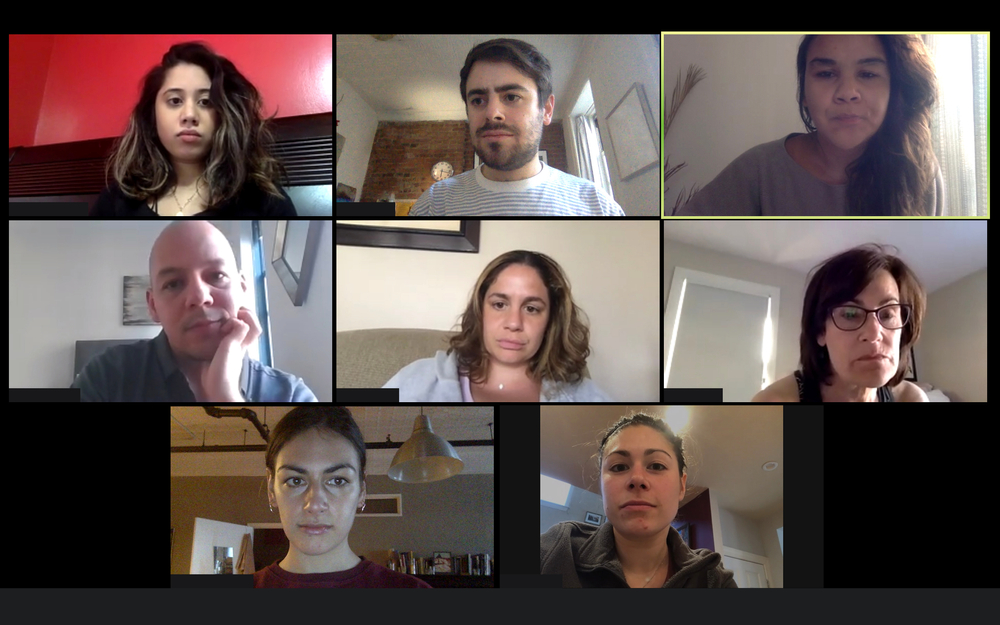
Most meetings happen on screens now, and that shift has installed a set of norms worth examining. Cameras optional. AI note-takers sent in place of the actual attendee. Attention split across open tabs and incoming messages. These feel like reasonable accommodations to the realities of distributed work. Physiologically, they are something else.
The autonomic nervous system has a dedicated network for processing the social signals of other human faces, what researchers call the social engagement system. It reads facial expression, eye contact, and the subtle movements around the eyes and mouth to assess safety, connection, and relational intent. This happens continuously, and it shapes the quality of every exchange. When cameras are off, that information is simply gone. When an AI note-taker attends in someone's place, not only is the face absent. The nervous system is absent. There is no one in the meeting whose state can be read, whose presence contributes to the regulation of the group, or whose engagement signals to everyone else that this conversation matters enough to actually show up for.
A culture where this becomes standard stops expecting full presence and stops noticing its absence. Meetings get leaner in the narrow sense, shorter, more documented, more actionable, and less generative in the deeper sense, because the human contact that builds trust and creates genuine alignment has been designed out of them.
A meeting culture that erodes company culture looks efficient from the outside. Meetings start on time. Agendas are followed. Decisions get recorded. But the underlying exchange is performative rather than real: people saying what is expected, agreeing to what is safest, raising their hands for action items they are not sure they can deliver. This culture teaches the people inside it that their actual thoughts are not the point. What is wanted is their compliance, their output, and their composure. Everything else they learn to leave at the door.
The cost of that learning is not immediately visible on any dashboard. It shows up in the quality of decisions, in the talent that exits, in the initiatives that fail not because the strategy was wrong but because the people executing it were never genuinely aligned to begin with.
Where AI Fits — and Where It Doesn't
This is the moment in the conversation where artificial intelligence tends to enter as a proposed solution. Meetings are inefficient: AI can summarize them. Communication breaks down: AI can draft the message. Alignment is hard to achieve: AI can track the action items and send the reminders.
These are real capabilities. A well-designed AI tool removes significant friction from the administrative surface of organizational communication: the scheduling, the documentation, the synthesis of information across large volumes of text. That matters. It frees human attention for the work that actually requires it.
But here is what AI cannot do. It cannot be present in the room. It cannot register the hesitation in someone's voice before they agree to something they are not sure about. It cannot notice that the new team member has gone quiet in the last three meetings and wonder what that means. It cannot hold a grounded presence that makes it safer for the person across the table to say the true thing rather than the easy thing. It cannot co-regulate — cannot, by the quality of its own nervous system state, make another nervous system feel settled enough to think clearly and engage honestly.
That last point deserves its own post, and it will get one. For now the short version: nervous systems are not isolated systems. They respond to each other continuously, through voice, breath, facial expression, timing, and proximity. A leader who is genuinely settled changes the physiological state of the people around them. No AI tool produces that effect. And no AI tool can replace the trust that accumulates between people who have been present with each other through difficulty, through uncertainty, through the ordinary friction of working toward something hard together.
What AI can do is give human presence more room. When the administrative burden is lighter, when documentation happens in the background, when scheduling and synthesis take less of the finite resource of human attention, there is more of that attention left for the irreplaceable work of actually being in the room with another person.
An Invitation Back Into the Room
For the executive: the culture of your organization is not built in your strategy documents or your values statements. It is built in your meetings, in what you make room for, what you model, and what you make safe. A leadership presence that is genuinely settled, that creates space for honest exchange, and that treats the humanity of the people in the room as a resource rather than a variable to be managed is not a soft leadership style. It is the highest-leverage communication investment available to you.
For the individual: the version of you that shows up fully, that brings your actual thinking, your honest assessment, your real engagement, is not a liability in a healthy organization. It is what you were hired for. If the environment you are in has made that feel unsafe, that is important information. And if there is any room to model a different way of being in the meeting, even incrementally, that modeling has effects you may not be able to see directly.
The room changes when real nervous systems show up in it. Presence is contagious in the same way that its absence is. A single person who is settled, listening, willing to say the true thing can shift the quality of an entire exchange, not by performing engagement, but by embodying it.
That is something a summary cannot capture, an agenda cannot produce, and a tool cannot replace.
It requires a human in the room. And it requires that human to actually be there.
If you are thinking about what genuine presence looks like in your organization, in your meetings, in your leadership, in the culture you are building or inheriting, schedule a free consultation and we will start there.
References
- Porges, S. W. (2011). The Polyvagal Theory: Neurophysiological Foundations of Emotions, Attachment, Communication, and Self-Regulation. W. W. Norton & Company.
- Porges, S. W. (2017). The Pocket Guide to the Polyvagal Theory: The Transformative Power of Feeling Safe. W. W. Norton & Company.
- Brown, B. (2018). Dare to Lead: Brave Work, Tough Conversations, Whole Hearts. Random House.
Sign up for the GROW Voice newsletter to receive updates on new blog posts, upcoming workshops, and voice training resources delivered directly to your inbox.

Related posts
Like a Phone on a Flight: Why Video Calls Drain Your Body and Your Voice
Video calls strip away the cues your body reads in a room. Here's why that leaves you fidgety, loud, and hoarse, and what to do about it.